
Tariff Intelligence Feed: Import Duty Updates for Wholesale Bags
Live tariff news feed for wholesale bag importers. Track Section 301 changes, reciprocal tariff updates, IEEPA rulings, and HS code duty rates for canvas, non-woven, and textile bags.
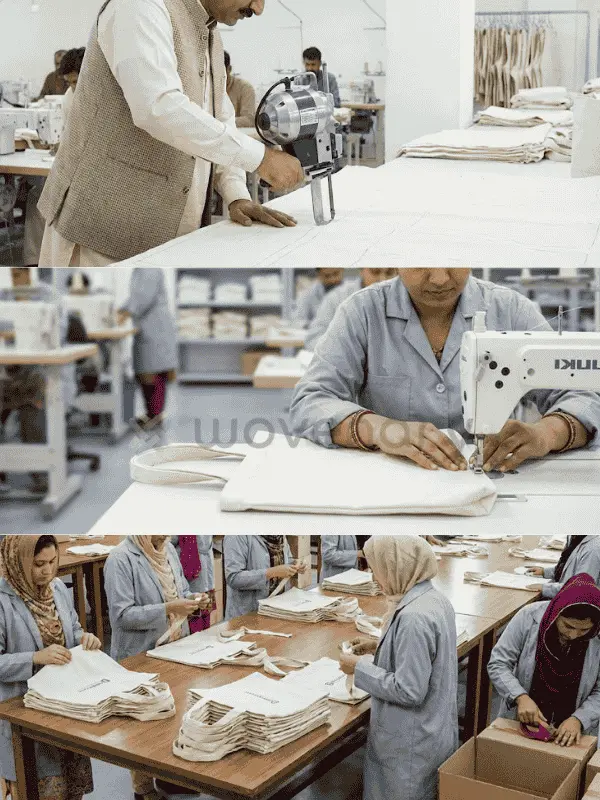
U.S. import tariff policy reshaped the wholesale bag landscape across 2025-2026. Between the Supreme Court's IEEPA invalidation, Section 301 extensions, and reciprocal tariff swings of up to 145% on Chinese goods, every landed-cost quote needs current data. This feed tracks the rulings, executive orders, and HTS updates that move the math for canvas, non-woven, and textile bag importers.
February 20, 2026 — Supreme Court Strikes Down IEEPA Tariffs
Tag: Court Ruling | Countries: China, Pakistan, India, Vietnam, Bangladesh | Impact: High
The U.S. Supreme Court ruled that IEEPA does not authorize the president to impose tariffs, invalidating reciprocal tariffs on imports from most countries.
In a 6-3 decision authored by Chief Justice Roberts, the Court held that the International Emergency Economic Powers Act does not grant the executive branch authority to impose tariffs. The ruling found that tariff power is reserved for Congress under Article I of the Constitution. An estimated $175-179 billion in IEEPA-based tariff collections are now in legal limbo, with refund procedures still unclear. The administration has signaled it may pivot to Section 122 authority for a replacement 10% global tariff.
Buyer takeaway: IEEPA-based reciprocal tariffs are currently unenforceable. However, new tariffs under Section 122 may follow. Wovenary is monitoring daily and adjusting landed-cost quotes in real time.
February 22, 2026 — Administration Signals Section 122 Replacement Tariffs at 10%
Tag: Reciprocal Tariff | Countries: All | Impact: High
Following the SCOTUS ruling, the White House announced plans to reimpose a 10% global tariff under Section 122 trade authority.
President Trump announced that tariffs would be reimposed under Section 122 of the Trade Act of 1974 to replace the invalidated IEEPA tariffs. The new tariffs, announced verbally but not yet formalized via executive order, would apply globally at a flat 10% rate. Trade attorneys note that Section 122 has a 150-day statutory limit and requires a finding of serious balance-of-payments deficit. The legal basis remains contested.
Buyer takeaway: A flat 10% rate under Section 122 would be significantly lower than the previous IEEPA rates for most origins. For Wovenary sourcing lanes (Pakistan), the effective rate change may be minimal since MFN duties on bags already range 5-8%.
February 2, 2026 — U.S. Cuts India Tariff from 50% to 18% After Oil Deal
Tag: Reciprocal Tariff | HS Codes: 4202.92.45 | Countries: India | Impact: Medium
President Trump reduced tariffs on Indian exports from 50% to 18% after Indian oil companies agreed to stop purchasing Russian oil.
In a geopolitical trade-off, the administration slashed tariffs on Indian goods from 50% to 18% after several major Indian oil companies committed to ending Russian oil purchases. For bag importers, this narrows the cost gap between India-sourced and Pakistan-sourced goods. Indian non-woven PP bags under HS 4202.92.45 previously faced a combined rate of roughly 37%; the new effective rate would be approximately 28% (10% MFN + 18% reciprocal), though the SCOTUS ruling complicates enforcement of the reciprocal component.
Buyer takeaway: Even at the reduced 18% reciprocal rate, India-sourced bags remain significantly more expensive than Pakistan-origin alternatives at 5-8% MFN. The tariff advantage for Wovenary sourcing lanes persists.
January 1, 2026 — 2026 MFN Duty Rates Confirmed for Bag HS Codes
Tag: HS Code Update | HS Codes: 4202.92.31, 4202.92.45, 4202.31.60 | Countries: All | Impact: Low
The Harmonized Tariff Schedule for 2026 confirms standard MFN duty rates for key bag product categories.
The 2026 HTS confirms the following MFN duty rates for common bag classifications: HS 4202.92.31 (textile travel/sports/shopping bags, cotton outer) at 17.6% general rate; HS 4202.92.45 (textile bags, man-made fiber outer) at 17.6% general rate. These are the base rates before any trade-preference or additional tariff layers. For countries with no special trade agreement or additional tariff exposure (like Pakistan), the effective rate is the standard MFN rate of 6-8% for most bag categories.
Buyer takeaway: Standard MFN rates remain stable year-over-year. Wovenary quotes already factor in the current HTS rates. No action needed — this is a baseline reference for cost comparisons.
November 10, 2025 — USTR Extends 178 Section 301 Exclusions Through November 2026
Tag: Section 301 | HS Codes: 4202.92 | Countries: China | Impact: Medium
The Office of the U.S. Trade Representative extended 178 product exclusions from China Section 301 tariffs for another year.
USTR confirmed that 178 previously granted exclusions from China Section 301 tariffs will remain in effect until November 10, 2026. These exclusions provide temporary relief from the additional 25% duties on List 3 products. While most textile and bag categories (HS 4202) are not among the excluded items, the extension signals continued willingness to grant targeted relief where domestic supply chains face strain.
Buyer takeaway: Canvas and non-woven bags from China still face the full 25% Section 301 surcharge on top of MFN duty. Pakistan-sourced bags avoid Section 301 entirely, maintaining a 15-20 percentage point landed-cost advantage.
August 15, 2025 — Effective China Tariff Rate Reaches 145% on Select Categories
Tag: Section 301 | HS Codes: 4202.92.31, 4202.92.45 | Countries: China | Impact: High
Escalating trade war pushed combined tariff rates on Chinese goods to as high as 145% before the SCOTUS ruling.
A tit-for-tat tariff escalation between the U.S. and China pushed effective rates to unprecedented levels. For textile bags under HS 4202.92, the combined rate included the standard MFN duty (17.6%), Section 301 tariff (25%), and IEEPA reciprocal tariff (variable). While the SCOTUS ruling in February 2026 invalidated the IEEPA layer, Section 301 tariffs on Chinese goods remain in full effect as they were authorized under a separate statute.
Buyer takeaway: Even post-SCOTUS, China-origin bags face MFN + Section 301 duties totaling 42-45%. Pakistan-sourced bags at 5-8% MFN with no Section 301 exposure remain the clear cost-optimized lane.
April 9, 2025 — Reciprocal Tariffs Paused 90 Days for Most Countries (China Excluded)
Tag: Reciprocal Tariff | Countries: Pakistan, Vietnam, Bangladesh, India, Cambodia | Impact: Medium
President Trump paused reciprocal tariffs for all countries except China after 75+ nations signaled willingness to negotiate.
On the same day reciprocal tariffs took effect, the administration announced a 90-day pause for all countries except China. The pause was extended through July 9, 2025, and subsequently further extended. Countries like Cambodia (49%), Vietnam (46%), Bangladesh (37%), and India (27%) had faced steep new duties before the pause. Pakistan was assessed at 29% under the reciprocal tariff formula, but the pause and subsequent SCOTUS ruling mean this rate was never durably applied.
Buyer takeaway: The reciprocal tariff pause protected Pakistan-origin shipments from the 29% surcharge. Combined with the later SCOTUS invalidation, Wovenary sourcing lanes were never materially impacted by reciprocal tariffs.
April 5, 2025 — Pakistan Faces 29% Reciprocal Tariff Rate (Now Invalidated)
Tag: Reciprocal Tariff | HS Codes: 4202.92.31 | Countries: Pakistan | Impact: Low
The initial reciprocal tariff formula set Pakistan at 29%, significantly increasing effective duty on textile exports to the U.S.
Under the April 2025 reciprocal tariff executive order, Pakistan was assessed a 29% additional duty on all exports to the United States. For textiles — which represent 75-80% of Pakistan's $6 billion in annual U.S. exports — this would have been devastating. Synthetic apparel faced a combined 61% rate (32% MFN + 29% reciprocal). Cotton canvas bags under HS 4202.92 would have faced roughly 35% total. The 90-day pause and eventual SCOTUS ruling prevented durable application.
Buyer takeaway: This rate was never durably applied. Pakistan-origin canvas and non-woven bags continue to enter at standard MFN rates of 5-8%, making them the most cost-effective sourcing option for U.S. importers.
How Wovenary uses this feed
Every landed-cost quote we issue factors live tariff rates — not last quarter's. For deeper context on the structural cost gap between origins, read our Section 301 tariffs guide and factory-direct sourcing analysis. For bag specs that drive HS classification, see our canvas vs non-woven vs cotton breakdown.
If you are pricing a 2026 program, brief us on origin, HS code, and quantity — we will return a DDP quote that reflects the current duty exposure, not stale rates.
— Annem Zaidi, Tariff & Compliance Lead, Wovenary
Frequently asked questions
How does the Supreme Court IEEPA ruling affect wholesale bag importers?
What is the current effective tariff rate on China-origin bags?
What is the tariff rate on Pakistan-origin canvas and non-woven bags?
Did Section 301 exclusions get extended for 2026?
Why did the U.S. cut India tariffs from 50% to 18%?
What are the 2026 MFN duty rates for bag HS codes?
What is Section 122 and how does the 10% replacement tariff work?
Have a program to scope?
Send your specs and quantity for a free, all-in DDP quote. We'll confirm artwork needs and next steps with you.
Get a free quote