
California SB 1053: The 2026 Reusable Bag Law Compliance Guide
On January 1, 2026, California SB 1053 closed the thick-plastic loophole for state-covered stores. Here's exactly what changed, what bags are now legal, and what our LA customers shifted to.
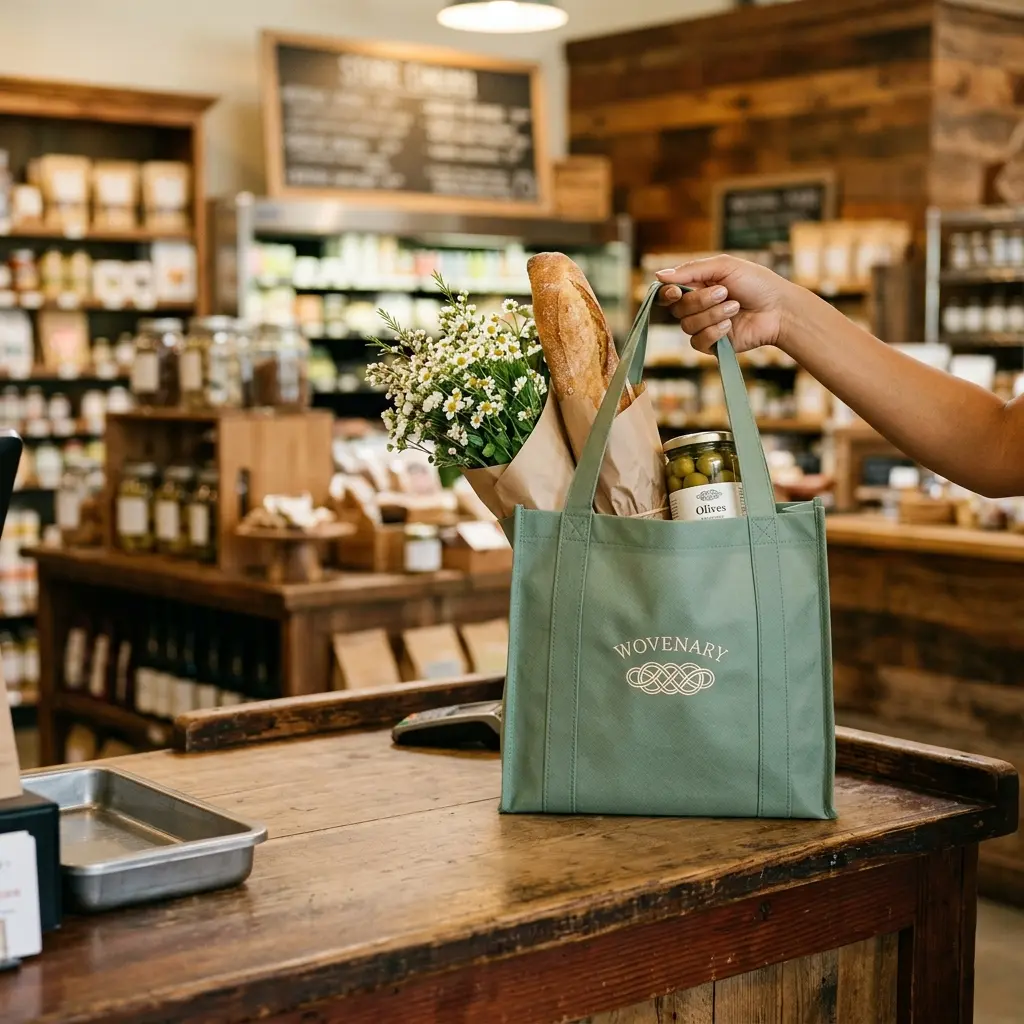
For our LA customers, January 1, 2026 was the morning the math finally settled.
SB 1053 had been signed into law in September 2024, with a 16-month implementation window that most retailers used to run down existing inventory. We watched the orders shift in real time across Q4 2025 — first DTLA Fashion District wholesalers placing speculative buys in October and November, then independent grocery in December once it was clear the law was going to land as written, then the long tail of West Side boutique retail in the first two weeks of January as 311 complaints started circulating.
This guide is what we tell every California retailer who asks us what changed and what to source. It's grounded in the orders we actually shipped into LA County in Q1 2026.
The 60-second answer
SB 1053 closed the thick-plastic loophole on January 1, 2026 for state-covered stores in California. Before the law, retailers could comply with the 2014 carryout-bag rules by handing out plastic bags ≥2.25 mils thick and calling them "reusable." That worked on paper and failed in practice — most of those bags were single-use in reality, and CalRecycle's 2022 audit found California had not reduced overall plastic-bag use since 2016.
After the law, three options remain at checkout for covered stores:
- Genuine reusable bags that meet the 125-use durability standard (stitched handles, 22-lb / 175-ft carry test, 15-liter minimum, woven or natural-fiber, affixed tag, heavy-metal certs).
- Recycled paper bags with ≥40% post-consumer content, sold at a 10¢ minimum (rising to 50% PCR on Jan 1, 2028).
- Compostable bags meeting ASTM D6400 with specific labeling.
The thick-plastic option is gone. Civil penalties start at $1,000/day per store.
What "covered store" means — and where the gaps still are
SB 1053 itself applies to grocery stores, retail stores with a licensed pharmacy, convenience stores, food marts, and liquor stores. That covers the bulk of California retail by transaction count, but it leaves real categories out at the state level — pure apparel stores, restaurants serving food for off-premises consumption, farmers' markets, hardware stores.
This is where the city ordinances do the heavy lifting. LA City's LAMC Article 2.1, which became operative in 2023, extends the bag-rule framework to:
- Apparel stores
- Farmers' markets and open-air markets
- Food and beverage facilities (including restaurants)
- Hardware stores
So in the City of LA, a clothing boutique on Melrose has the same checkout-bag obligation as a Vons on Wilshire. In unincorporated LA County, the original 2011 Chapter 12.85 ordinance covers a broader set of stores than SB 1053 alone. We tell our LA customers to read their incorporated-city ordinance first, then the County code, then SB 1053 — the strictest one wins.
What we shipped into LA in the first 90 days
Three patterns held across roughly 80 LA-area orders in Q1 2026. The numbers below are direct from our production logs, not industry averages.
Pattern 1: Grocery and convenience moved to laminated BOPP at retail-merchandise prices
We saw a sharp shift from any kind of plastic-film bag to 100–120 GSM laminated BOPP totes — non-woven PP shell with a printed BOPP film lamination on the outside. Landed cost in our typical run sizes ($0.65–$1.10 at 10,000+ units, DDP to LA) lets retailers stock and sell these as merchandise SKUs at $1.99–$2.99 with margin to spare. The mechanic mirrors what we see in Chicago and NYC: customer buys a branded reusable once, brings it back ten times, and the retailer captures both the SKU margin and a brand-impression every trip.
The compliance read-out: 100+ GSM stitched PP clears LA County's 125-use test by a wide margin (we run accelerated-use testing at 200+ cycles in QC), the heavy-metal certs are standard issue, and the affixed tag with manufacturer name / country of origin / PCR percentage is part of our default labeling for any bag bound for California.
Pattern 2: DTLA Fashion District consolidated on 12oz cotton canvas
The Fashion District generally orders ahead of trend; the post-SB-1053 reorders were already moving by mid-October 2025. The default shifted from any plastic / paper hybrid to 12oz cotton canvas, 13 × 15 × 4 inch standard, stitched handles, one-color screen print. Order sizes ran 5,000–10,000 units; landed cost at that volume is $1.35–$2.40 from our Pakistan facilities DDP to LA.
The reason this works for Fashion District resellers: the bag is also their product (or their packaging). It photographs well, takes a logo cleanly, and lets the buyer bundle it into a multi-SKU drop for boutique retailers across LA, Vegas, and Seattle. The compliance benefit is incidental — the bag would clear the rule even if SB 1053 had never passed.
Pattern 3: Entertainment-industry gifting moved up-market
The third pattern is smaller in volume but interesting in unit economics. Studio wrap-gift programs, premiere swag, and awards-season giveaways had historically leaned on premium-quality plastic film for the visual gloss. After SB 1053 made that approach effectively illegal at certain retail surfaces and reputationally awkward at all of them, the orders we saw in Q1 2026 shifted to embroidered 12oz cotton canvas at $3.20–$4.50 per unit, ordered in smaller batches (500–2,000 units) with custom dye-house dye lots and contrast-color handles. The premium covers itself in perceived value at the gift table.
The compliance fields we put on every California-bound bag
When a California retailer asks us "what do I need on the tag?", here's the literal field list we work from. We default to including all of these on every bag we ship into California, even when only LA County or LA City requires a subset:
| Field | Source | What it says |
|---|---|---|
| Manufacturer name | LAMC § 195.01 + LACC § 12.85.010 | "Wovenary Inc., Bethesda, MD" |
| Country of origin | LAMC § 195.01 | "Pakistan" |
| Heavy-metal statement | LACC § 12.85.010(I)(3) | "This bag does not contain lead, cadmium, mercury, or hexavalent chromium in toxic amounts" |
| Post-consumer recycled content | LACC § 12.85.010(I)(4) | Percentage by weight; "0%" is valid for first-life material |
| Designed for multiple reuse | LACC § 12.85.010(I)(1) | The statement that the bag is intended for ≥125 uses |
| Material type | implicit in spec | Helpful for buyer documentation even when not strictly required |
The tags are stitched into a side seam (most common) or heat-sealed on a hangtag depending on product. They cost us roughly $0.02 per bag at production. We don't charge a separate line item for them — it's part of the default California spec.
What this means for buyers in adjacent states
A pattern we're watching: SB 1053's structural model — outright plastic ban at point of sale + paper fee + reusable-bag standards on top — is the template that other state legislatures are tracking. New York has been ban-plus-fee since 2020 (NY ECL § 27-2801 and the Mid-Atlantic equivalents). Chicago raised its fee to 15¢ in January 2026. Philadelphia added a 10¢ fee in November 2025 on top of its existing plastic ban.
If you're a national retailer or a brand selling into multiple bag-law jurisdictions, the practical move is to specify the California-compliance package on every reusable order regardless of destination. The unit-cost delta is negligible, and the documentation overhead of running a single SKU through three different state specs is real.
Quick procurement checklist for California retailers
- [ ] Confirm whether your store category is covered by SB 1053 at the state level, by your county ordinance, and by your incorporated-city ordinance. The strictest applies.
- [ ] Pull existing plastic-film stock out of carryout rotation. It cannot be used as carryout regardless of when it was purchased.
- [ ] Source a 100+ GSM stitched reusable (woven PP, non-woven PP, or cotton canvas) with affixed manufacturer tag. Ask the supplier for the TUV or SGS heavy-metal cert and the PCR statement on file.
- [ ] Decide your customer-pricing model. The two that work: sell reusables as merchandise SKUs at the register, or hand them out as branded carryout and absorb the unit cost.
- [ ] If you stock compliant paper as a backup, confirm the supplier's PCR percentage is ≥40% (rising to ≥50% on Jan 1, 2028).
- [ ] Train cashiers on the 10¢ paper fee mechanic and the SNAP/WIC exemption.
- [ ] Save vendor compliance documentation in a folder for inspection response.
When to get a quote
If you're a California retailer placing your first post-SB-1053 order, the lead times that worked for us in Q1 2026 are 4–6 weeks ocean from Pakistan to the Port of LA / Long Beach, plus 3–5 days customs and intermodal into the LA basin. Air freight via LAX runs 10–14 days door-to-door if a holiday or event window is tight. MOQ for the standard California-compliant lineup is 500 units across most SKUs.
Get a quote for California-compliant wholesale bags — we'll review your requirements and follow up with a landed-cost breakout, sample lead time, and the compliance documentation package.
— Annem Zaidi, Co-founder, Wovenary
Frequently asked questions
What changed under SB 1053 on January 1, 2026?
What's the penalty for handing out a non-compliant bag at checkout?
What qualifies as a 'reusable bag' in California today?
Are Wovenary bags compliant for California checkout?
What did our LA customers actually switch to after January 1?
Do existing plastic-bag inventories need to be disposed of?
How does SB 1053 stack against city-level bag ordinances in LA?
What about the 2028 recycled-content increase?
Have a program to scope?
Send your specs and quantity for a free, all-in DDP quote. We'll confirm artwork needs and next steps with you.
Get a free quote