
Non-Woven Bags vs Plastic Bags for Retail
Retail comparison: non-woven PP reusable bags vs single-use plastic (HDPE) bags. Compliance considerations, durability expectations, branding, and program cost impact.
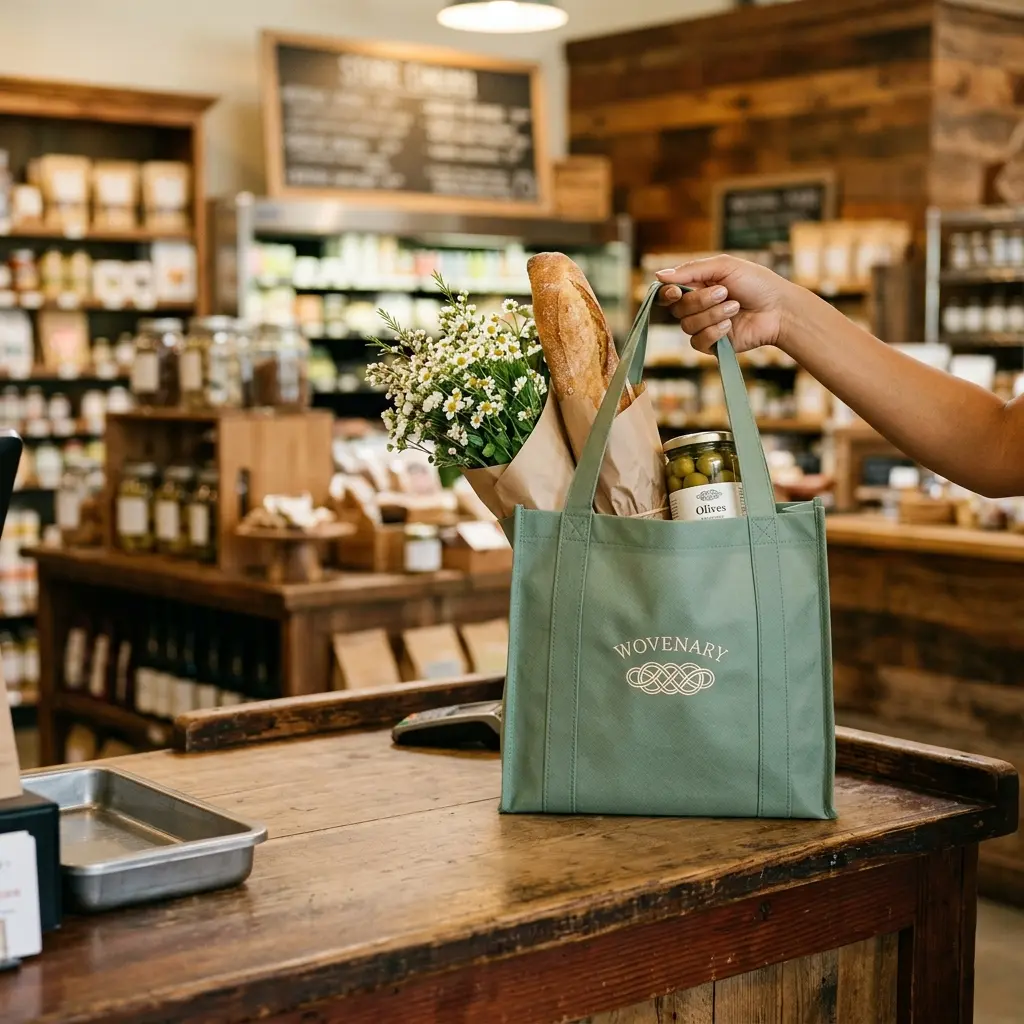
Non-woven PP bags are the default replacement for single-use plastic at retail checkout in regulated jurisdictions because they are built as reusable bags — reinforced seams, stitched handles, and durability that meets most "reusable bag" legal definitions. For a 1,000-bags-per-week store, the switch pays back in under 3 months. This page lays out the comparison procurement teams need to make the call.
Recommendation up front
We recommend the 80 GSM stitched non-woven as the best cost-to-compliance match for most retail checkout programs. It clears the construction requirements in most bag-ban jurisdictions (stitched handles, minimum fabric weight), prints cleanly, and lands within $0.45-$0.70 per unit at typical retail volumes.
Feature comparison
| Feature | Non-Woven PP (Reusable) | HDPE Plastic (Single-Use) |
|---|---|---|
| Regulatory status | Often permitted (meets "reusable" criteria) | Often restricted in regulated jurisdictions |
| Typical use-life | Designed for repeat use (reinforced seams/handles) | Designed for single use; higher tear risk |
| Construction | Non-woven fabric + stitched or reinforced handles | Thin film "T-shirt" style bags |
| Branding value | High — print surface + repeated exposure | Low — short lifespan, lower perceived value |
| Recycling reality | PP-based materials may be recyclable where accepted | Often not accepted curbside; collection varies |
Choose non-woven PP if...
- You operate in jurisdictions with plastic bag restrictions and need a reusable alternative.
- You want the closest cost-match to a checkout program while adding durability.
- You want your bag to carry brand visibility beyond the store.
- You need high-volume procurement with stable specs.
Validate local requirements first
"Reusable" definitions vary by city, county, and state and may specify construction plus minimum material specs. A compliant program usually means standardizing specs across locations — and documenting them. If you serve multiple regions, you may need a "highest common denominator" bag spec that satisfies the strictest jurisdiction in your footprint. Our Mid-Atlantic bag-ban finder and Montgomery County bag-law guide cover the most active rule zones.
How to switch from plastic to non-woven reusable bags
1. Assess your current bag usage. Calculate weekly plastic bag consumption and cost. Most retailers use 500-2,000 bags per week at $0.02-$0.05 each. Multiply by 52 to find annual spend — that becomes the baseline for ROI comparison.
2. Choose your non-woven specification. Select GSM weight (80-120 GSM for standard retail), handle style (stitched for bag-law compliance), and bag size based on typical purchase volume. Heavier GSM equals longer use life.
3. Calculate ROI on reusable bags. Non-woven bags at $0.45/unit, designed for 125+ uses, break even against $0.04 plastic bags within their first 12 uses. For 1,000 bags/week, annual paper bag cost ($2,080) versus a one-time reusable investment ($450) pays back in under 3 months.
4. Order and transition. Source compliant non-woven bags factory-direct with MOQs from 1,000 units. Update checkout flow, train staff on the bag fee policy, and communicate the switch to customers with in-store signage.
Program cost: where the math actually lands
A 1,000-bag-per-week store running HDPE at $0.04 per bag spends roughly $2,080/year on disposable bags — and that figure doesn't include the local bag fee (typically $0.05-$0.10/bag) that many jurisdictions now collect. Switch the same store to 80 GSM stitched non-woven at $0.45/unit reused 125 times: the bag replaces 125 disposables, total cost per "use" drops to $0.0036, and the program turns net positive in under a quarter.
For multi-location retailers, the savings compound. A 50-store chain at the same weekly volume saves roughly $80,000-$100,000 in disposable bag spend annually after switching, while gaining a print surface that travels home and back to the store as durable advertising.
What buyers under-spec on (and regret)
Three places we see retail programs cut the wrong corner:
- GSM weight. 40-60 GSM ultrasonic-welded bags ship cheap but fail most reusable-bag legal definitions and tear inside 10 uses. Spec 80+ GSM stitched and stop revisiting the line item.
- Handle reinforcement. Bartacked or double-stitched handles add $0.05-$0.08 per unit and triple usable lifespan. Skip the savings.
- Print method. Flexo runs cheap at volume but cracks on the second wash. Screen print with plastisol ink holds for the life of the bag.
For the deeper material trade-off — when to step up to canvas, when non-woven is the right call — see our canvas vs non-woven vs cotton breakdown and non-woven primer.
Ready to make the switch?
Get factory-direct pricing on compliant non-woven bags. Wovenary ships from Pakistan-direct supply at MOQ 1,000+ with free DDP landed quotes tailored to your brief.
— Annem Zaidi, Tariff & Compliance Lead, Wovenary
Frequently asked questions
Why do retailers switch from plastic bags to non-woven PP bags?
Are non-woven bags compliant with plastic bag bans?
Do non-woven bags cost more than plastic bags?
What's the best low-cost compliant alternative to plastic?
How quickly do reusable bags pay back against plastic bag spend?
What GSM should I spec for compliant retail non-woven bags?
Have a program to scope?
Send your specs and quantity for a free, all-in DDP quote. We'll confirm artwork needs and next steps with you.
Get a free quote