
Wine Tote Buyer's Guide 2026: Neoprene vs Canvas vs Insulated
Procurement guide for wholesale wine totes — neoprene, canvas, and insulated builds compared. 1, 2, 3, and 6-bottle sizing, imprint methods, MOQs, and per-unit pricing for 2026.
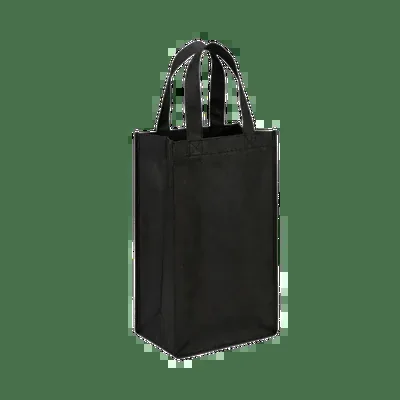
Wine totes sit at a specific intersection of product and promotional that most bag programs miss: they are technical carriers that need to solve a functional problem (carry bottles without breakage) while doing double duty as branded gifting. Get the spec right and you have a retail-quality holiday gift at wholesale pricing. Get it wrong and you have an expensive generic tote that your recipients use for grocery runs.
This guide walks procurement teams through the wine-tote decision from material to sizing to imprint method.
The three primary material choices
Wine-tote builds reduce to three dominant materials. Each owns a specific positioning.
| Material | Best For | 2026 Price / Unit (500 MOQ) | Durability | Perceived Quality |
|---|---|---|---|---|
| Neoprene (single-bottle) | Athletic events, outdoor gifting, technical branding | $2.80-$4.50 | High (water-resistant) | Mid-premium |
| Canvas 10-14oz | Corporate gifting, retail GWP, wine-club programs | $3.20-$5.50 (1-bottle) / $4.50-$7.00 (2-bottle) | Very high | Premium / retail-grade |
| Insulated (PEVA or foil-lined) | Wine-subscription boxes, extended-transit programs | Add $1.50-$3.00 to base price | Medium | Technical / functional |
Neoprene is the default for single-bottle, technical-feeling branding. It is water-resistant (useful for condensation), has a stretch fit that holds the bottle snugly, and takes pad print or dye sublimation well because neoprene is polyester-faced. Where neoprene struggles: anything above a single bottle. Multi-bottle neoprene builds exist but feel structurally compromised compared to canvas equivalents.
Canvas (10-14oz) is the procurement default for wine-tote programs above single-bottle capacity. A canvas tote with a reinforced base and interior divider holds 2-3 bottles reliably, presents as retail-quality, and takes every imprint method well. For corporate holiday gifting and retail GWP programs, this is the correct spec.
Insulated builds (typically PEVA-lined canvas or foil-backed neoprene) add functional temperature preservation. Cost premium is $1.50-$3.00 per unit. The decision gate is how long the bottle sits in the bag — if under 2 hours, insulation is decorative; if 4-8+ hours, it is meaningful.
Sizing: match bottle count to use case
The single most common wine-tote procurement error is over-sizing. A six-bottle case tote branded for a single-bottle executive gift feels disproportionate and ends up in the recipient's recycling bin. Match the size to the actual use case.
- 1 bottle (~4x4x14"). Executive gifting, retail GWP, corporate holiday. The most versatile size. Ships flat, stores easily at scale.
- 2 bottles (~7x4x14"). Couple or dinner-party gifting, wedding-favor programs. Slightly more presentation but still gift-feel.
- 3 bottles with dividers (~10x4x14"). Premium wine-club, upscale retail. Interior dividers are non-negotiable at this size — bottle-to-bottle contact cracks glass.
- 6 bottles (~13x10x14", case-style). Wine-subscription boxes, case-purchase retail, winery direct-to-consumer. Requires reinforced handles and base. Typically laminated or heavy canvas.
For programs where bottle count varies across recipients (mixed gifting tiers, for example), our recommendation is to spec a single-bottle and two-bottle SKU rather than a single larger size. Recipients react better to a right-sized gift than to an oversized carrier.
Imprint methods for wine totes
Wine totes print well across most methods because canvas and neoprene are both forgiving substrates. The decision reduces to positioning and artwork complexity.
- Screen print (water-based ink). Default for 1-3 color logos on canvas. Clean, durable, cost-efficient at 500+ units. For retail programs, specify water-based ink over plastisol for a softer hand feel and cleaner ESG positioning.
- Embroidery. Premium positioning. Adds $0.80-$1.40 per unit and 5-7 days of lead time. Correct choice for executive holiday gifting and corporate VIP programs.
- DTF (direct-to-film). Full-color artwork, gradient logos, photographic imprints. Works on both canvas and neoprene. $0.30-$0.80 per unit above screen print. Best for wine-club programs where each recipient gets a custom name or cohort variant.
- Debossing. Ink-free, permanent, tactile. Adds $0.40-$0.70 per unit. Available on 14oz+ canvas only. The right call for luxury gifting where the imprint needs to survive 5+ years.
- Hang-tags and woven labels. Add dimensional branding outside the main imprint. Typically $0.15-$0.40 per unit. Common for retail wine-tote programs that need to hang in-store.
For the full imprint decision framework across canvas and related bag categories, see our tote bag printing methods guide.
Pricing math: what to budget at common quantity bands
Rough 2026 DDP landed pricing for a 12oz canvas wine tote with single-color screen print, factory-direct sourcing from Pakistan:
| Quantity | 1-Bottle Canvas | 2-Bottle Canvas | 3-Bottle Canvas (dividers) |
|---|---|---|---|
| 500 units | $4.20-$5.50 | $5.60-$7.00 | $7.20-$9.00 |
| 1,000 units | $3.60-$4.60 | $4.80-$6.00 | $6.20-$7.80 |
| 2,500 units | $3.20-$4.00 | $4.30-$5.30 | $5.50-$6.80 |
| 5,000 units | $2.90-$3.60 | $3.90-$4.80 | $5.00-$6.10 |
| 10,000 units | $2.60-$3.30 | $3.50-$4.30 | $4.50-$5.50 |
Insulation adds $1.50-$3.00 per unit at any quantity band. Embroidery adds $0.80-$1.40. Full-color DTF adds $0.30-$0.80. Custom sizing (any dimensions outside the standard SKU) adds $0.20-$0.40 and 5-7 days of lead time.
The three most common use cases
Corporate holiday gifting (typical run: 250-1,500 units). Single-bottle 12oz canvas with embroidered logo and coordinating gift box or ribbon closure. Budget $5-$8 per unit all-in. Ships by mid-November for December distribution. Use case: executive gift to clients, investors, or tier-1 accounts.
Retail GWP (typical run: 2,000-10,000 units). Two-bottle 10-12oz canvas with screen-printed logo and interior divider. Budget $3.50-$5.50 per unit. Distributed at point-of-purchase with a qualifying wine purchase. Use case: supermarket or specialty liquor store promo tied to a wine vintage or season.
Wine-subscription program (typical run: 5,000-25,000 units annually). Three-bottle laminated canvas with insulation, branded with the subscription logo plus cohort or vintage detail via DTF. Budget $5.50-$8.50 per unit. Use case: ships with the subscription box every cycle; retained by the subscriber.
Each use case has a specific spec sweet spot. The mistake most buyers make is running a single SKU across all three — which over-spends on the promo and under-spends on the executive gift simultaneously.
The procurement timeline
Most wine-tote programs are holiday-adjacent or subscription-release-adjacent, which means timelines are unforgiving. Backward-schedule from the distribution date:
- 12 weeks out. RFQ submitted, origin routing locked.
- 10 weeks out. Sample kit approved. Spec finalized.
- 9 weeks out. Artwork approved in writing. Production begins.
- Week 5-6 before distribution. Production complete. Container loaded.
- Week 1-2 before distribution. Delivered to warehouse or kitting facility.
- Distribution week. Ship to end recipients.
For holiday programs (Thanksgiving through New Year), this means RFQs in September for November delivery. Brands that start the RFQ in October typically end up air-freighting, which adds $0.40-$0.80 per unit — small for small runs, meaningful at 5,000+.
Brief us on your wine program
Share quantity, bottle count per tote, distribution date, and any branding constraints (corporate colors, vintage or cohort variants, interior-branding requirement). We will review your requirements and follow up with a DDP landed quote and sample-kit recommendation.
— Ibrahim A Samad, Co-founder, Wovenary
Frequently asked questions
What is the difference between a wine tote and a regular tote bag?
Which wine tote material is best for gifting programs?
How much does a wholesale wine tote cost per unit?
What is the MOQ for custom wine totes?
Which imprint method is best for wine totes?
Do I need insulation for a wine gifting program?
What size wine tote should I order?
Can wine totes be fully branded inside and out?
Have a program to scope?
Send your specs and quantity for a free, all-in DDP quote. We'll confirm artwork needs and next steps with you.
Get a free quote