
Wholesale Bag Trends 2026-2027: Materials, MOQs, and Sustainability
The five trends reshaping wholesale bag procurement in 2026-2027 — recycled content, declining MOQs, EPR and bag-ban expansion, tariff-driven origin shifts, and imprint technology adoption.
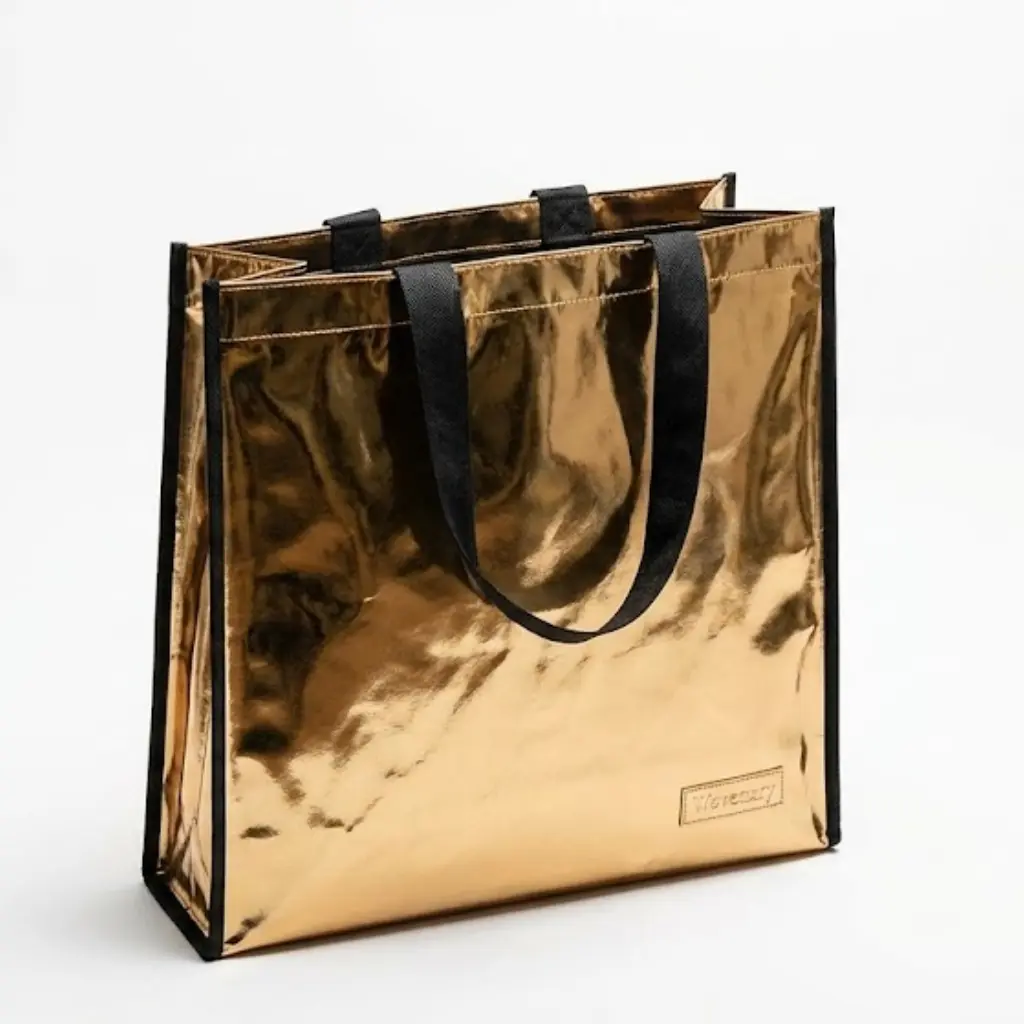
Wholesale bag procurement in 2026 is not the same discipline it was in 2023. Duty structure, sustainability disclosure, bag-ban expansion, and imprint-technology adoption have each shifted independently, and together they have re-priced every program on the market. Buyers who still procure against a 2023 playbook are over-paying 20-30% without knowing it. This article maps the five trends that matter most for planning 2026-27 spend.
Trend 1: Origin diversification has moved from optional to standard
The China-exclusive sourcing default is effectively dead for commodity bag categories. Section 301 duties at 12-15% on canvas and non-woven from China are structural, not temporary, and the past two years have given buyers enough runway to validate alternate origins at scale.
The 2026 standard is a two-origin model:
- Pakistan for canvas, cotton, denim, and non-woven. 5-8% duty, mature audit infrastructure, supply-chain parity with China on lead time.
- Vietnam for polyester and poly-blend. 2-4% duty, fastest West Coast lane, mature polyester supply chain.
For most buyers, the practical question in 2026 is no longer "should we diversify" but "which origin should handle what share of our annual volume." Full treatment of the tariff math is in our Section 301 tariffs guide.
What this means for your 2026-27 plan: expect to run an annual origin review, not a multi-year single-origin contract. Factory-direct vendors who can route across all three origins are structurally cheaper than distributors who route through a single broker.
Trend 2: MOQs have fallen dramatically
The most under-appreciated 2026 trend is that the MOQ floors that defined the promotional-bag market for decades have collapsed. What was a 1,000-unit minimum in 2020 is now a 200-unit minimum at most factory-direct vendors. What was a 5,000-unit minimum for custom sizing is now 500-1,000.
Drivers:
- Factory over-capacity. Pakistan and Vietnam both expanded capacity during the 2022-2024 China-exit surge. Capacity ran ahead of demand, which means factories need smaller orders to fill schedules.
- Digital order management. Mature factories now run digital spec, proof, and production-tracking systems that make small runs economically viable — the old argument that "small runs don't scale" was partly a software problem, not a manufacturing problem.
- Sample-to-production compression. Sample production lines now double as small-batch production lines, collapsing the ramp between pilot and full run.
What this means for your 2026-27 plan: if you are a mid-market brand or a regional program that previously self-selected out of factory-direct sourcing because of MOQ barriers, revisit the math. A 500-unit custom program is now realistic.
Trend 3: Sustainability disclosure is the new table stakes
"Sustainable" as a marketing word is becoming a liability. Regulators (EU Green Claims Directive, FTC Green Guides in the US) and procurement teams (internal ESG mandates) now require defensible metrics, not adjectives. Three claims hold up in 2026:
- Recycled-content disclosure with percentage and certification. Global Recycled Standard (GRS), Recycled Claim Standard (RCS), or equivalent third-party verification. A bag with "30% recycled cotton (GRS certified)" is useful; a bag with "eco-friendly materials" is noise.
- Lifecycle impact per use. A reusable canvas tote used 200 times has a dramatically lower per-use footprint than a single-use alternative — that is the honest comparison. Per-bag footprint is misleading for reusables.
- Documented end-of-life pathway. Recyclability "in theory" (the material is technically recyclable) vs. "in practice" (there is infrastructure in the distribution market to actually recycle it). 2026 procurement teams increasingly require the latter.
What this means for your 2026-27 plan: if your bag program feeds into an ESG or scope-3 report, start specifying recycled-content percentage and third-party certification at quote time. The per-unit premium for verified-recycled is $0.15-$0.40 on canvas and $0.08-$0.18 on non-woven — small enough to be worth it for defensibility.
Trend 4: EPR expansion is reshaping packaging spend
Extended Producer Responsibility is no longer a theoretical discussion. In 2026, six US states have active or phased-in packaging EPR programs: California (SB 54), Colorado, Maine, Minnesota (phasing in), Oregon, and Washington. Each program assigns financial responsibility for end-of-life recovery to the producer — meaning a brand distributing bag programs in these states carries the EPR fee line item whether or not it is internally tracked.
Practical implications for 2026-27:
- Know your producer status. If you import branded packaging directly, you are a producer under most EPR definitions. If you buy through a distributor, the distributor may or may not absorb the fee.
- Document material composition. EPR fees typically vary by material recyclability. Virgin plastic pays more than recycled content; non-recyclable composites pay more than pure fibers. Factory-direct spec documentation makes this easy to produce; distributor chains often cannot.
- Expect expansion. New York, New Jersey, Illinois, and Massachusetts have active EPR legislation in various stages. Assume the list of covered states grows each year through 2027.
What this means for your 2026-27 plan: EPR fees are small at today's scale ($0.01-$0.05 per unit typically) but real, and the documentation burden is the bigger issue. Factory-direct sourcing eliminates the compliance paperwork gap.
Trend 5: Imprint technology is splitting the market
Screen print has been the wholesale bag default for 40 years. It remains the cost leader at 1,000+ units with simple 1-3 color artwork. But 2026 has produced a genuine imprint split:
- DTF (direct-to-film) has matured into a production technique for orders from 250-5,000 units. For photographic imprints, gradient artwork, or small-batch custom runs (each bag with a different name, for example), DTF is now the default. Per-unit cost runs $0.30-$0.80 additional versus screen print.
- Embroidery holds the premium positioning — executive gifting, retail branding, heirloom corporate gifts. Per-unit cost is $0.60-$1.40 additional, adds 5-7 days of lead time.
- Debossing on heavy canvas (14oz+) is the fastest-growing premium method. Ink-free, permanent, tactile. Adds $0.40-$0.70 per unit and is ideal for corporate gifting where the imprint needs to survive 5+ years of use.
- Screen print with water-based ink is replacing plastisol as the default for retail and reusable-bag programs. Softer hand feel, zero PVC content. 2026 ESG-sensitive brands are specifying water-based by default.
What this means for your 2026-27 plan: spec imprint method by program, not by default vendor capability. A vendor who only offers screen print is running on 2015 infrastructure. See our tote bag printing methods guide for the full imprint decision framework.
What it adds up to: the 2026-27 procurement playbook
If we compress the five trends into an operating playbook for a brand planning bag spend through 2027:
- Diversify origin. Pakistan for canvas and non-woven, Vietnam for polyester. Reserve China for emergencies.
- Treat MOQs as negotiable. The 500-unit factory-direct quote now exists. Use it for pilots, regional programs, and mid-market runs.
- Pre-spec recycled content and certification on everything. The cost premium is small; the ESG defensibility is high.
- Route only through vendors that produce EPR documentation as a standard deliverable.
- Match imprint method to program. DTF for photographic, screen for volume, embroidery for premium, debossing for corporate gifting. Water-based ink as the 2026 default for retail.
Buyers who adopt all five compound their landed-cost advantage year over year. The structural gap between a disciplined 2026 procurement program and a 2023-style default supply chain is now 25-40% of landed cost, and we expect that gap to persist or widen through 2027.
Brief us on your 2026-27 plan
If you are mapping out your bag spend for the next 18 months, we will run an origin and imprint audit against your current supplier at no cost — compare line-for-line what you are paying now versus what the 2026 factory-direct baseline looks like. Share your quantity, use cases, and current vendor's quote; we will review the details and confirm the next steps.
— Ibrahim A Samad, Co-founder, Wovenary
Frequently asked questions
What is the biggest change in wholesale bag procurement in 2026?
Are MOQs falling in 2026?
Which sustainability claims actually hold up for 2026 bag programs?
What is EPR and how does it affect bag sourcing?
Is digital printing replacing screen print for tote bags?
How should brands plan for bag-ban and single-use regulation expansion?
Will air freight remain viable for 2026-27 bag programs?
What is the 2026-27 outlook for canvas vs. non-woven share of total bag volume?
Have a program to scope?
Send your specs and quantity for a free, all-in DDP quote. We'll confirm artwork needs and next steps with you.
Get a free quote